
NewsMotor Vehicle Accident Care

Condition focus
Motor Vehicle Accident Care
Injuries from a car crash are not always obvious on the day. Neck pain, back pain and headaches can appear or worsen over the following days. This topic collects our coverage of car accident injuries and recovery.
Get the latest updatesJust published
Latest Accident Care News
Updated Oct 14, 2026View all news
NewsMotor Vehicle Accident Care
Neck Pain After a Fender-Bender? Symptoms You Shouldn’t Ignore

Expert Insight
Best Pain Management Clinic in Lewisville, TX
In Depth Stories
Explained Updated Oct 16, 2026
What causes accident care? A closer look
Whiplash — the head is thrown backward and forward, straining the muscles, ligaments, discs and small joints of the neck; it happens even in low-speed rear-end collisions Facet joint injury in the neck or lower back
Read the full overview
Living with pain
Fifteen Minutes With a Pain Specialist: How to Make Them Count
What to bring, what to write down beforehand, and the questions that get the most useful answers from a pain specialist.
Read the storyExpert Insight
Motor Vehicle Accident Pain Treatment in Tulsa & Dallas
Pain after a car accident in Tulsa, Dallas, or New Mexico? SEVA Healthcare treats whiplash, post-MVA neck/back pain, and nerve injuries. We work with attorneys and insurance carriers. Same-week appointments.
Read the insightGuide
Whiplash After a Car Crash: What the First Six Weeks Usually Look Like
You felt fine at the scene. Two days later you cannot turn your head. Why whiplash behaves this way, what helps early on, and when to ask for a specialist.
Read the storyLatest Research Updates
The newest research explainers across all conditions — accident care studies appear here as we publish them.



Plain-language overview
Understanding Motor Vehicle Accident Care
What it means
Injuries from a car crash are not always obvious on the day. Neck pain, back pain and headaches can appear or worsen over the following days. This topic collects our coverage of car accident injuries and recovery.
Symptoms and warning signs
- Neck pain and stiffness that often appear or worsen 24–72 hours after a crash (whiplash)
- Headaches starting at the base of the skull
- Low back or buttock pain, sometimes from the sacroiliac joints
- Pain, tingling or numbness spreading into an arm or leg, which can mean a nerve root is irritated
- Dizziness, trouble concentrating, poor sleep or irritability after the collision
- Call 911 or seek emergency care for loss of consciousness, confusion, severe headache, new weakness or numbness, severe neck pain, chest or abdominal pain, or difficulty breathing
Causes and risk factors
- Whiplash — the head is thrown backward and forward, straining the muscles, ligaments, discs and small joints of the neck; it happens even in low-speed rear-end collisions
- Facet joint injury in the neck or lower back
- Disc herniation pressing on a nerve root
- Strain of the lumbar muscles and sacroiliac joints
- Post-traumatic headache, and less commonly complex regional pain syndrome after trauma
- Pain is often masked at first by adrenaline, and inflammation builds over the following days
Conditions in this group
As listed by SEVA Healthcare on its motor vehicle accident care page.
- Whiplash and cervical strain
- Cervical facet joint pain
- Disc herniation and radiculopathy
- Lumbar strain and SI joint pain
- Post-traumatic headache
- CRPS and complex regional pain
- Peripheral nerve injury
How clinicians evaluate it
After a crash, a clinician examines the neck, back and nerves and decides whether imaging is needed. Keeping a record of symptoms from the day of the accident helps both care and any insurance claim.
Treatments SEVA Healthcare lists
Copied from the official page. Listing a treatment does not mean it suits every patient or is available at every clinic — a doctor decides after an evaluation.
- Radiofrequency Ablation (RFA)
- Transforaminal Epidural Steroid Injection
- Medial Branch Block & Facet Joint Injection
- Occipital Nerve Block
- Sacroiliac (SI) Joint Injection & RFA
- Stellate Ganglion & Sympathetic Blocks
- Peripheral Nerve Stimulation (PNS)
- Spinal Cord Stimulation (SCS)
How SEVA Healthcare treats motor vehicle accident care
When to seek urgent care.
Call 911 after a crash for loss of consciousness, severe headache, confusion, numbness or weakness, severe neck pain, or chest or abdominal pain.
Everyday self-management
General education, not a plan for you. Check with your clinician before changing activity or medicines.
- Get checked after a crash even if you feel fine — some injuries declare themselves days later, and early records help both care and any insurance claim
- For most whiplash, staying gently active and returning to normal movement is recommended over prolonged use of a collar
- Note your symptoms from day one, including sleep and concentration, and keep copies of imaging and reports
- Heat, cold and over-the-counter pain relief, used as directed, help with early soreness
- Ask for a specialist assessment if pain persists beyond a few weeks or spreads into a limb; pain that lasts beyond six to twelve weeks has a higher chance of becoming long-lasting
Questions to discuss with a clinician
- Do I need imaging now, and what would change if we found something?
- Which of my symptoms are expected after whiplash, and which need further tests?
- What should I do and avoid in the first weeks?
- If my pain does not settle, what are the next steps and when would we consider them?
- What documentation will I need for my insurer or attorney, and can your office help with it?
Frequently asked questions
Should I see a doctor even if I feel fine after a crash?
Pain from some injuries, such as whiplash, can build over the following 24–72 hours. A medical check soon after a crash helps find injuries early and documents them.
Does SEVA Healthcare work with attorneys and insurers?
SevaHealthcare.com states that its team works directly with attorneys and insurance carriers for motor vehicle accident patients.
Sources
- SEVA Healthcare — Motor Vehicle Accident Care (official service page; conditions and treatments listed, checked October 16, 2026)
- Back Pain — MedlinePlus (NIH), accessed October 16, 2026
- Chronic Pain — MedlinePlus (NIH), accessed October 16, 2026
This overview is general information written by our editors from the official SEVA Healthcare pages and the patient-education sources above. It has not yet been medically reviewed; see our medical review policy. Last updated Oct 16, 2026.
Expert Perspectives
The board-certified pain specialists behind SEVA Healthcare, as listed on the official site.
-
Founder · Board-certified anesthesiologist, pain management
Dr. Jayen Patel, MD
American Board of Anesthesiology · MD, Boston University School of Medicine
View profileI always tell my patients: the trial period exists precisely so you don’t have to take my word for it. You will know within a week whether it works for you.
-
Double board-certified in anesthesiology & pain medicine
Dr. Amit Mirchandani, MD
Residency: Yale University Hospital · Fellowship: Rush University (pain medicine)
View profileI see Dallas patients regularly whose knee X-rays look terrible but who have manageable pain — and others whose X-rays look mild but who can’t sleep. The pain isn’t in the image. It’s in the inflammation and the nerve signaling.


Trending in Accident Care
View all stories Hurt in a Motor Vehicle Accident? Why You Should See a Doctor Before You Call a Lawyer · 5 min read
 Neck Pain After a Fender-Bender? Symptoms You Shouldn’t Ignore · 3 min read
 Whiplash After a Car Crash: What the First Six Weeks Usually Look Like · 2 min read
- Motor Vehicle Accident Pain Treatment in Tulsa & Dallas · 5 min read
Related Pain News
View all conditions Back & Neck PainDisc problems, sciatica, spinal stenosis, facet arthritis and pain that continues after s…Read more
 Joint, Knee & Musculoskeletal PainKnee arthritis, shoulder and hip pain, tendon injuries and joint inflammation.Read more
 Headache & Migraine PainMigraine, occipital neuralgia, tension and cluster headaches, and headaches after an inju…Read more
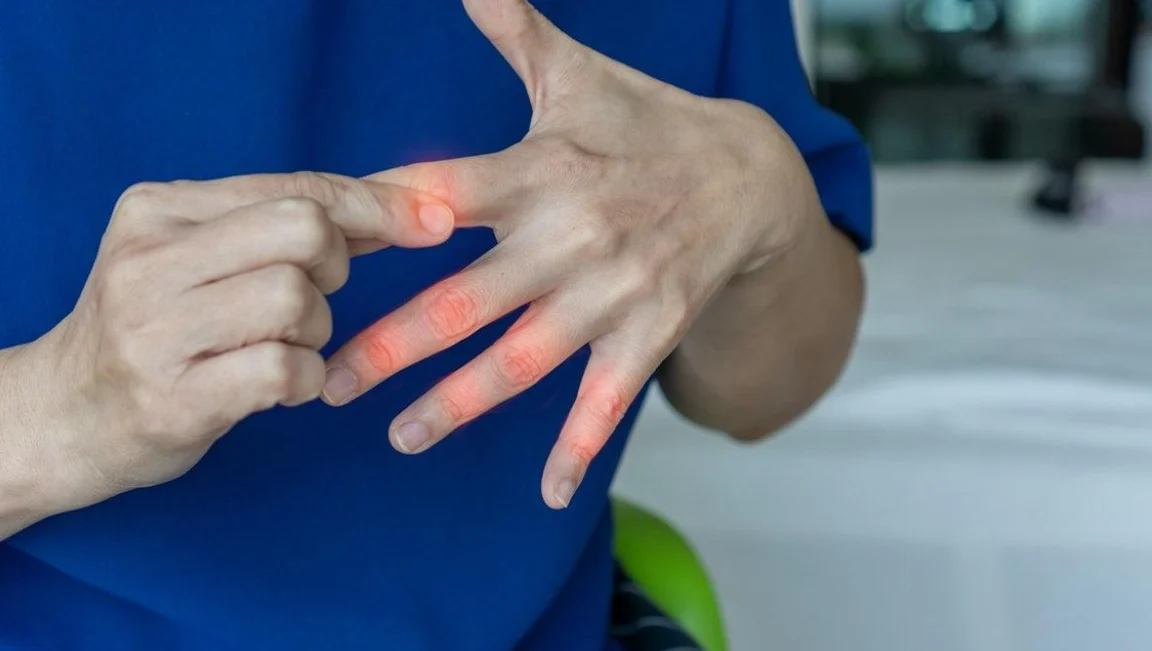 Nerve & Neuropathic PainPeripheral and diabetic neuropathy, CRPS, nerve entrapment and nerve pain after surgery.Read more